

What Is Florida HOA Special Assessment Accounting?
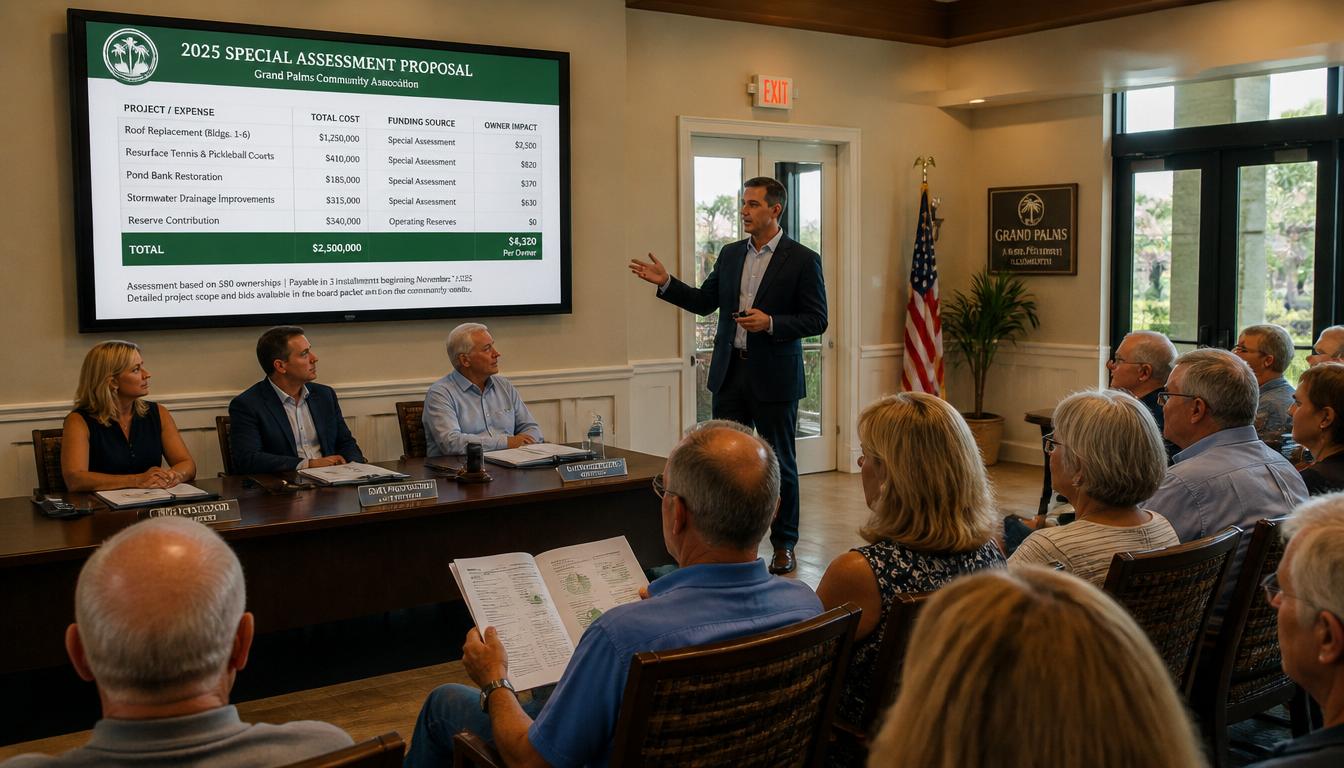
Florida community associations occasionally face extraordinary expenses that the operating budget cannot absorb. Florida hoa special assessment accounting governs how associations properly record, track, and report these additional charges levied against owners.
Section 720.303 of the Florida Statutes establishes the procedural requirements associations must follow before levying a special assessment. Boards that understand the accounting side of this process protect their communities from financial errors and legal exposure. Therefore, proper special assessment accounting is as important as the authorization process itself.
Defining Florida HOA Special Assessment Accounting
Special assessments are extraordinary charges levied against unit owners to fund specific expenses outside the operating budget. Examples include major roof replacements, structural repairs, storm damage remediation, and legal proceedings. Furthermore, each special assessment must be authorized through a proper board or membership vote before any charge posts to owner accounts.
This accounting process refers to recording, collecting, and reporting all special assessment activity. It covers posting charges to owner ledgers, tracking collections, managing installment schedules, and reporting results in financial statements. Consequently, accurate florida hoa special assessment accounting requires the same rigor as regular assessment collection.
Statutory Requirements for Special Assessment Authorization
State law requires boards to follow specific procedural steps before levying a special assessment. The board must hold a noticed meeting, present the purpose and amount, and obtain the required vote. Furthermore, owners must receive proper notice of the assessment before charges apply.
Associations that skip these steps risk levying a defective special assessment that owners can challenge. Proper authorization documentation must be preserved alongside the accounting records. Therefore, the financial records for any special assessment must include evidence of proper authorization as supporting documentation.
Recording Special Assessments in the General Ledger
Once authorized, florida hoa special assessment accounting requires immediate posting of the total charge to each owner’s ledger. The amount per unit is typically calculated based on the ownership percentage defined in the governing documents. Additionally, the entire special assessment receivable posts to the balance sheet as a current asset upon authorization.
A corresponding liability or reserve account for the specific purpose must be established on the expense side. This ensures collected funds remain designated for their intended use. Moreover, funds collected for a special assessment should never be commingled with general operating funds.
Managing Installment Schedules and Collections
Many associations allow owners to pay special assessments in installments over a defined period. Each installment due date must be clearly communicated and documented in the association’s records. Furthermore, the accounting system must track each installment separately to reflect accurate outstanding balances for every owner account.
Delinquency management for special assessments follows the same principles as regular assessment collections. Late fees and interest may apply based on the governing documents. Consequently, the same collection tools and statutory procedures that govern regular delinquency also apply to unpaid special assessment installments.
Reporting Special Assessments in Financial Statements
Collected special assessment funds appear as a separate revenue line on the income statement, distinct from regular assessment income. Any related expenditure posts as a distinct expense line tied to the authorized purpose. Similarly, uncollected receivables appear on the balance sheet as current assets until fully collected.
Reserve or liability accounts established for the assessment purpose appear on the liabilities side until funds are actually expended. Therefore, boards and CPAs can track the complete financial cycle from authorization through full expenditure. This transparency supports member oversight and satisfies statutory disclosure obligations simultaneously.
How Technology Supports Special Assessment Accounting
Purpose-built software significantly improves how associations manage florida hoa special assessment accounting. Automated billing tools post charges to every owner account simultaneously upon board authorization. Furthermore, installment tracking features monitor due dates and outstanding balances for each owner account in real time.
Integrated financial reporting separates special assessment activity from regular operating revenue and expenses automatically. Above all, digital records of every authorization, billing, collection, and expenditure create the complete audit trail associations need for proper financial management.
Steps for Achieving Goal
- Obtain proper board or membership authorization for the special assessment and preserve all meeting records as supporting documentation.
- Calculate the per-unit assessment amount based on ownership percentages defined in the governing documents.
- Post the total special assessment receivable to every owner ledger immediately following authorization.
- Establish a separate ledger account for special assessment funds to prevent commingling with operating accounts.
- Communicate installment due dates clearly to all owners and document the payment schedule in the association’s records.
- Apply late fees and interest to unpaid special assessment balances in accordance with the governing documents.
- Adopt purpose-built software that automates special assessment billing, installment tracking, and financial statement reporting.
Key Takeaways
- Florida hoa special assessment accounting governs how associations record, track, and report extraordinary charges levied against owners.
- Section 720.303 requires proper board authorization and owner notice before any special assessment charge posts to owner accounts.
- Special assessment receivables post to the balance sheet as current assets upon authorization, before any collection occurs.
- Funds collected for a special assessment must never be commingled with general operating funds.
- Installment schedules require individual tracking to maintain accurate outstanding balances for every owner account.
- Financial statements must reflect special assessment activity separately from regular assessment income and operating expenses.
- Purpose-built software automates billing, installment tracking, and reporting to support accurate special assessment accounting.
Conclusion
Boards that levy special assessments carry a heightened fiduciary obligation to manage those funds precisely and transparently. Accurate florida hoa special assessment accounting demonstrates that commitment through organized records, proper reporting, and complete audit documentation.
Strong special assessment accounting does more than keep the books accurate. Above all, it builds the owner trust that every association needs when extraordinary financial obligations arise. Therefore, associations that invest in disciplined special assessment accounting position themselves for stronger governance and greater stakeholder confidence.
The information provided on this website is NOT to be considered legal advice. Associations and unit owners should consult with legal counsel for the specific application of the Association’s governing documents and Florida Statutes.