

What Is HOA Accounts Payable Management?
Florida community associations process vendor invoices, utility bills, and contractor payments every single month. Without a structured system, these obligations create confusion, missed deadlines, and even legal exposure. Hoa accounts payable management gives boards and property managers the control they need to track every dollar owed and paid.
Chapter 720 of the Florida Statutes requires associations to maintain accurate financial records, including documentation of every expense. Therefore, a disciplined accounts payable process is not optional. It is a statutory necessity that protects the association and its members.
Defining Hoa Accounts Payable Management
The process refers to recording, approving, and paying every association expense in a structured way. Every invoice that arrives must be verified against a contract or purchase order. Furthermore, every payment must be documented with the date, amount, and recipient clearly recorded for future reference.
Tracking due dates closely also matters within hoa accounts payable management, since late fees and damaged vendor relationships often follow neglect. Boards that fail to manage payables consistently risk service interruptions from unpaid vendors. Consequently, a reliable system protects both the association’s finances and its operational continuity.
Core Components of an Effective Payable Process
Multiple controls must work together to support strong financial oversight. First, invoices must be reviewed by someone with knowledge of the original contract terms. Second, payments require approval from an authorized board member before funds leave the account. Moreover, every transaction must be recorded in the general ledger immediately after processing.
Separation of duties is equally important within this process. The person who approves an invoice should not be the same person who issues the payment. This control prevents errors and reduces the risk of fraud within the association.
Statutory Requirements Affecting Payable Records
Statutory obligations rarely specify every operational detail of accounts payable management. However, Florida law does require associations to maintain financial records that accurately reflect all transactions. Therefore, boards must implement internal processes that satisfy both operational efficiency and statutory record-keeping requirements.
Associations operating under Florida Statute 718 or 720 must also produce payable records during financial reviews. Incomplete or disorganized accounts payable records create significant complications during these statutory reviews. Boards that prepare in advance avoid unnecessary scrutiny and delay.
Why Manual Processes Create Unnecessary Risk
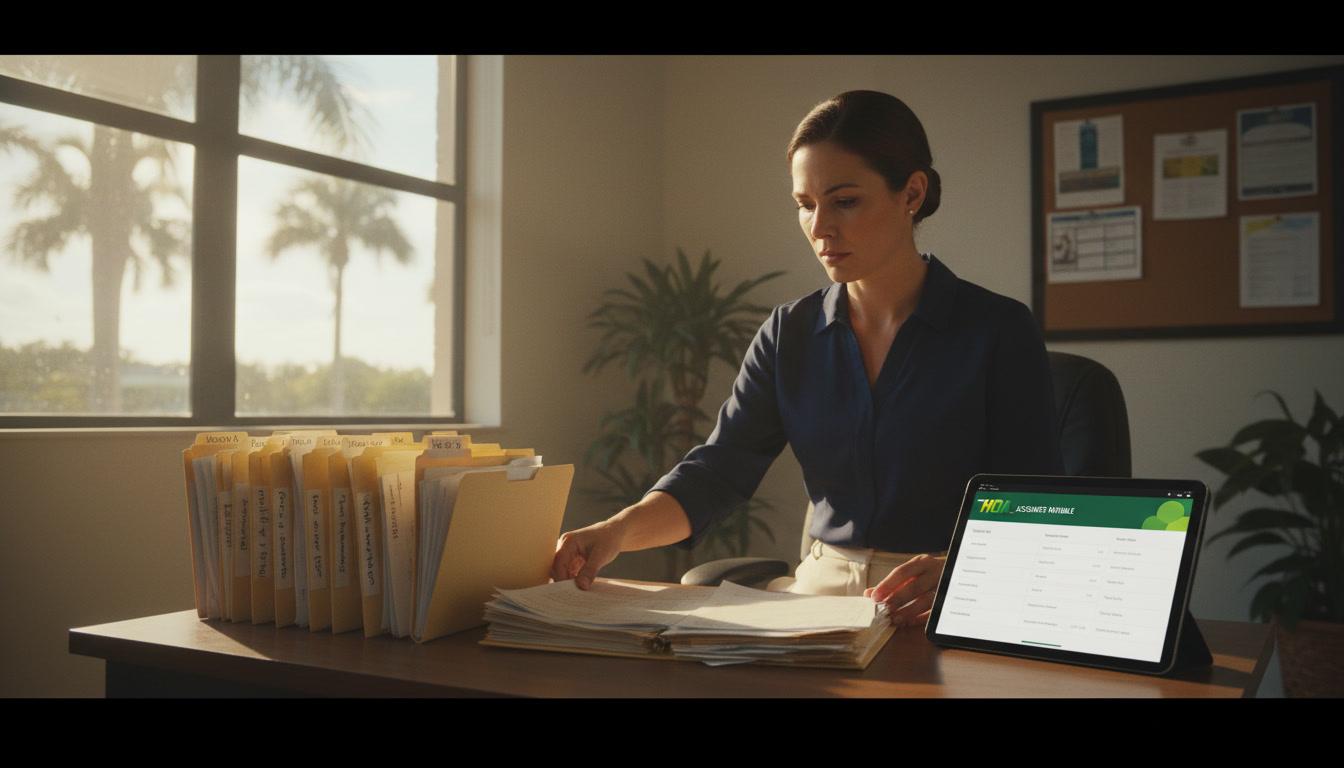
Manual accounts payable processes create unnecessary risk for community associations across the state. Spreadsheets get out of date quickly, and paper invoices get lost easily. Purpose-built software designed for hoa accounts payable management solves these problems directly.
Automated workflows route invoices to the correct approver immediately upon receipt. Payment scheduling tools prevent late fees by flagging due dates in advance. Furthermore, integrated reporting gives boards real-time visibility into outstanding payables at any moment.
How Technology Strengthens Payable Controls
Once invoices move through proper accounts payable controls, a documented audit trail forms automatically. This documentation proves invaluable during financial audits, board transitions, and disputes with vendors.
Organized payable records, in turn, support accurate financial statement preparation. Balance sheets and income statements depend on complete and accurate expense data. Therefore, strong accounts payable practices directly improve the reliability of every financial report the association produces.
Connecting Payables to the Broader Financial Picture
Linking payables to the rest of the budget matters more than many boards realize. The process connects directly to bank reconciliation, since every payment made must match a corresponding bank transaction. Additionally, it connects to budgeting, because actual expenses must be compared against budgeted amounts throughout the fiscal year.
Boards that understand this connection make better financial decisions overall. They can identify spending trends early. Moreover, they can adjust future budgets based on accurate historical data rather than guesswork.
Preparing Records for CPA Review and Audits
CPAs reviewing association finances rely heavily on clean, organized payable records. Disorganized systems slow down annual reviews and increase professional fees significantly. Consequently, associations that maintain consistent hoa accounts payable management practices reduce both audit time and cost.
Property managers who oversee multiple associations benefit even more from standardized processes. Above all, a unified approach to payable management strengthens trust between boards, managers, and the CPAs who serve them.
Steps for Achieving Goal
- Establish a written accounts payable policy that defines approval thresholds and required documentation for every expense category.
- Assign separate roles for invoice approval and payment issuance to maintain proper internal controls.
- Record every invoice in the general ledger immediately upon receipt, regardless of its payment due date.
- Implement a payment calendar that tracks due dates and prevents late fees on recurring vendor obligations.
- Reconcile accounts payable records against bank statements monthly to confirm every payment cleared correctly.
- Adopt purpose-built software that automates invoice routing, approval workflows, and payment scheduling for the association.
- Review outstanding payable reports at every board meeting to maintain transparency and informed financial decision making.
Key Takeaways
- Hoa accounts payable management requires structured recording, approval, and payment processes for every association expense.
- Florida Statute 720 requires accurate financial record-keeping that directly depends on disciplined accounts payable practices.
- Separation of duties between invoice approval and payment issuance protects associations from errors and fraud.
- Manual accounts payable processes using spreadsheets create unnecessary risk of lost or outdated information.
- Purpose-built software automates invoice routing, payment scheduling, and reporting for stronger financial control.
- Accurate payable records directly support reliable balance sheets, income statements, and overall financial reporting.
- CPAs and property managers benefit significantly from standardized, consistent accounts payable practices across communities.
Conclusion
Every Florida community association carries a foundational responsibility in hoa accounts payable management. Boards that approach it with discipline protect their communities from financial errors, vendor disputes, and statutory non-compliance.
Strong payable processes do more than keep vendors paid on time. Above all, they build the accurate financial foundation every other report and decision depends upon. Therefore, associations that invest in structured accounts payable practices position themselves for long-term financial health and statutory confidence.